
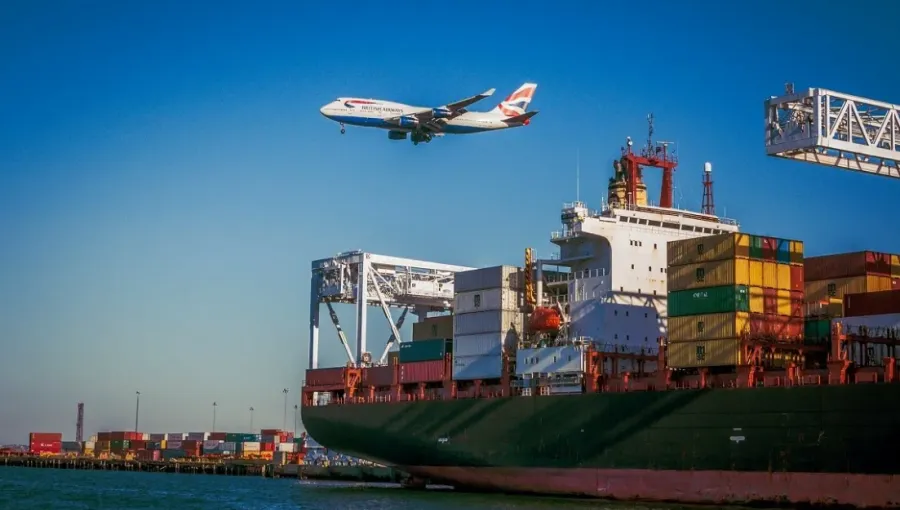
Choosing between air freight and sea freight from China to Iran is one of the most important decisions an importer makes. It directly affects your landed cost, delivery schedule, and cargo safety. This guide compares the two modes side by side — price, transit time, reliability, and cargo fit — so you can decide based on real business needs.
When is sea freight from China to Iran the right choice?
Sea freight from China to Iran is the cheapest option for large, heavy, or bulky shipments. If cost matters more than speed and your cargo is not time-critical, ocean shipping is usually the best fit.
Advantages of sea freight
- Lower cost per kg/m³: for heavy and volumetric cargo, ocean freight is far cheaper than air.
- Large capacity: 20ft and 40ft containers can handle almost any commodity.
- Ideal for bulky goods: furniture, building materials, home appliances, and machinery move best by sea.
- Secure for heavy loads: cargo is sealed inside a container with less handling damage.
Disadvantages of sea freight
- Long transit time: typically 22 to 36 days from Chinese ports to Bandar Abbas.
- Possible delays: port congestion, weather, and LCL consolidation can extend the schedule.
- Hidden costs: demurrage, storage, and customs clearance can increase the final bill if not planned.
Cargo best suited for sea freight
- Home appliances and furniture
- Bulk apparel and general merchandise
- Industrial machinery and spare parts
- Building materials, tiles, and ceramics
- Non-urgent shipments with flexible delivery dates
For small-volume cargo, sea freight LCL is more economical than booking a full container.
When is air freight from China to Iran the right choice?
Air freight from China to Iran is ideal for high-value, urgent, or lightweight cargo. When delivery speed matters more than freight cost, air is the clear winner.
Advantages of air freight
- Fast transit: usually 3 to 7 working days from China to Tehran or Bandar Abbas.
- Higher security: electronics, samples, and sensitive documents are less exposed to damage.
- Easy tracking: scheduled flights allow more accurate and frequent shipment tracking.
- Lower inventory needs: fast delivery reduces the amount of stock you must hold.
Disadvantages of air freight
- High cost: the rate per kilogram is typically 5 to 10 times higher than sea freight.
- Weight and volume limits: heavy or oversized cargo is not suitable for air transport.
- Cargo restrictions: lithium batteries, liquids, flammables, and dangerous goods face restrictions or bans.
- Airport handling fees: terminal, documentation, and insurance charges are usually higher than ocean.
Cargo best suited for air freight
- Product samples and commercial documents
- Electronics and mobile phones
- High-value auto spare parts
- Urgent orders and small-volume goods
- High-margin products where speed justifies the cost
Air vs sea freight from China to Iran comparison table
| Factor | Sea Freight | Air Freight |
|---|---|---|
| Transit time | 22–36 days to Bandar Abbas | 3–7 working days |
| Cost per kg | Much lower for heavy cargo | 5–10× more expensive than sea |
| Best for | Large, heavy, bulky shipments | Light, urgent, high-value cargo |
| Capacity | 20ft/40ft containers, almost unlimited | Limited by aircraft weight/volume |
| Cargo safety | Sealed container, good for heavy cargo | More control, good for sensitive cargo |
| Tracking | Moderate | More accurate and frequent |
| Ancillary costs | Demurrage, storage, customs | Terminal handling, insurance, docs |
| Schedule stability | More affected by port/weather | Usually more stable |
Tip: for cargo with high volumetric weight — such as furniture or large empty boxes — air freight is rarely cost-effective. Chargeable weight is based on whichever is greater: actual or volumetric weight.
How to choose between air and sea freight
1. Define your budget and timeline first
- If speed matters and cost is flexible → air freight
- If cost is the priority and the shipment is bulky → sea freight
- If you need a balance of both → rail freight or DDP door-to-door
2. Match the method to the product
Electronics and samples usually fly. Bulk merchandise, building materials, and furniture usually sail. For hazardous or licensed goods, consult a specialist before booking.
3. Plan around seasonality and demand
Rates for both modes rise before Chinese holidays (such as Chinese New Year) and before Nowruz in Iran. Booking earlier gives you more choices and often better rates.
4. Consider the exact origin and destination
If your supplier is in Guangzhou or Shenzhen, sea freight from southern Chinese ports is faster and cheaper. If your supplier is in Yiwu, rail freight from China to Iran can offer a good balance of cost and speed.
Can you combine air and sea freight?
Yes. Many importers use air freight for samples and sea freight for the bulk order after quality approval. This strategy:
- Shortens time-to-market (samples arrive quickly)
- Keeps large-order shipping costs low
- Reduces the risk of bulk buying without inspection
If you want a single solution that controls both cost and time, consider door-to-door DDP or rail freight.
Frequently asked questions
How long does air freight from China to Iran take? Usually 3 to 7 working days, depending on the origin airport and destination.
How long does sea freight from China to Iran take? About 22 to 36 days to Bandar Abbas, depending on the origin port and whether it is FCL or LCL.
Is air freight always more expensive than sea freight? For most cargo, yes. For very light, high-value items such as jewelry or documents, the gap may be smaller.
What goods cannot be shipped by air? Dangerous goods, unapproved lithium batteries, flammable liquids, and certain chemicals face restrictions or bans.
How is freight cost calculated? The forwarder compares actual weight and volumetric weight and charges whichever is higher. For an accurate quote, request a free quote with full cargo details.
Conclusion
If you need the cheapest option for large or bulky cargo, sea freight from China to Iran is the best choice. If speed is critical and your cargo is light or high-value, air freight is the better option. For many businesses, the smartest approach is a hybrid: send samples by air and the main order by sea. This gives the best balance of cost, speed, and risk control.
Not sure which method fits your shipment? Get a free quote or chat with us on WhatsApp